Co-create change with the people it affects.
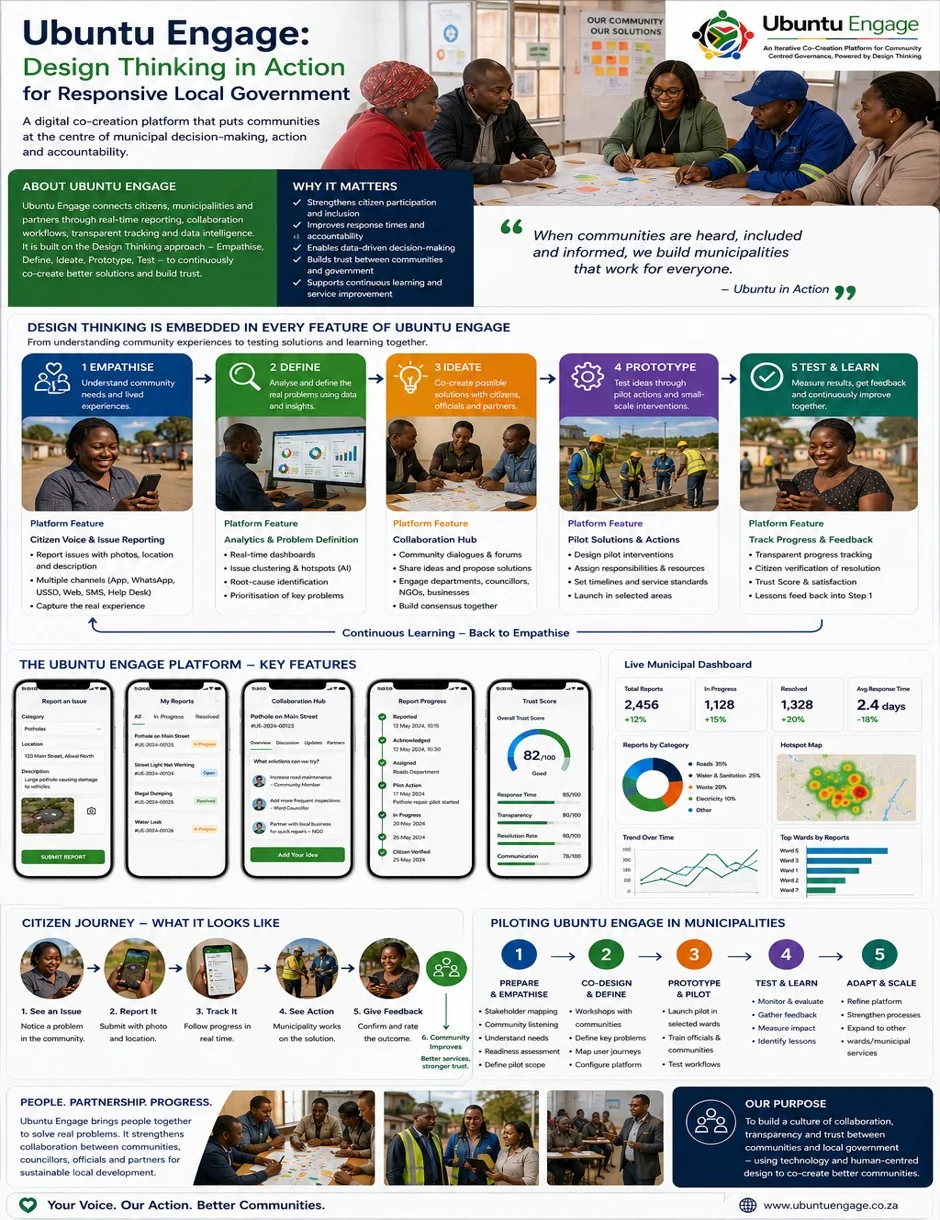
Design Thinking connects community knowledge with municipal expertise through five iterative stages. Every stage involves the people best placed to contribute.
Explore the process interactively.
Select a stage to understand the key participants, intended outcomes and supporting workflows.
Start with lived experience
Capture what residents experience before deciding what the problem is.
Participants: Community representativesOutcome: A grounded community empathy map
View stage details ↗Understand the underlying patterns
Interpret recurring reports, geography, severity and responses to define priorities.
Participants: Municipal officialsOutcome: A shared problem statement and prioritised evidence
View stage details ↗Co-create solutions together
Create a safe space for residents, officials and partners to explore alternatives.
Participants: Community representatives & officialsOutcome: Practical ideas selected for prototyping
View stage details ↗Test ideas in the real world
Pilot scoped interventions in selected wards, and track the evidence behind decisions.
Participants: Community representatives & officialsOutcome: Measured pilot actions ready for evaluation
View stage details ↗Verify outcomes and learn
Close the feedback loop by allowing communities to verify and rate municipal action.
Participants: Citizens, representatives & officialsOutcome: Improvement actions and learning that feed the next cycle
View stage details ↗Different strengths. Shared responsibility.
The process gives community representatives and officials meaningful, distinct responsibilities while encouraging collaboration in later stages.
- Empathise: led by community representatives.
- Define: led by municipal officials.
- Ideate: representatives and officials collaborate.
- Prototype and Test: representatives and officials validate outcomes together.
All participants follow documented consent, moderation and feedback protocols.